How to Talk About Croquet
Most club members didn't sign up to be recruiters. You joined because you enjoy the game, not because you wanted to stand at a shopping centre with a clipboard.
Most club members didn't sign up to be recruiters. You joined because you enjoy the game, not because you wanted to stand at a shopping centre with a clipboard.
But clubs grow through conversation. One person telling another about something they love.
You don't need a sales pitch. You need to recognise when someone might enjoy croquet, and know enough about what the game offers to make the connection.
What People Want. What Croquet Provides.
Forget demographics. Age doesn't tell you much. What matters is what someone is looking for and whether croquet can provide it.
Here are five common needs that croquet fills well. When you hear someone express one of these, you've found a potential match.
Mental Challenge
What they want: Something that makes them think. They miss the problem-solving from their working life, or they're bored with activities that don't engage their brain.
What croquet provides: Strategic depth. Every shot involves calculation: angles, positions, sequences, risk. Players compare it to chess. You can study croquet for years and still be learning.
You might hear: "I need something to keep my mind active." "I get bored easily." "I miss having something to figure out."
Outdoor Time
What they want: A reason to be outside. Often they've lost a garden through downsizing, or they spent decades working indoors and want to make up for it.
What croquet provides: Regular time on grass, under sky, in fresh air. Most clubs play several days a week. The lawns are maintained to a high standard.
You might hear: "I miss having a garden." "I want to get outside more." "We moved into a unit."
Community
What they want: Regular contact with people who know their name. Social life got harder after retirement, or after losing a partner, or after moving somewhere new.
What croquet provides: A built-in community. Same people, same days, same place. Morning tea, club events, people who notice when you're not there.
You might hear: "I don't see people as much as I used to." "It's harder to meet people than I expected." "Most of my friends are still working."
Gentle Competition
What they want: To compete again. They played sport once but their body can't do what it used to. They want something that tests them without punishing them.
What croquet provides: Real competition, scaled to your level. Handicap systems mean a beginner can play against an experienced player and both have something to fight for.
You might hear: "I used to play tennis but my knees gave out." "I miss having something to win at." "I want something competitive but not too physical."
Something to Master
What they want: Depth. Something they can get better at over time. Hobbies that max out quickly bore them.
What croquet provides: Years of skill development. The game has layers: basic strokes, then breaks, then tactics, then reading the lawn, then managing the clock. You can play for a decade and still be learning.
You might hear: "I want something I can really get into." "I like things where you can always improve." "I need a hobby with some depth."
The Simple Formula
When They're Interested
Don't oversell. Just say: "Why don't you come down and have a look? I'll introduce you."
Then send them to comeandtrycroquet.com to find their nearest club.
The Water Conversation Clubs Need to Have ASAP
CAQ opens the water conversation with QLD clubs ahead of the forecast dry El Niño winter-spring 2026. Three questions clubs need to answer, real figures on tanks, bores, and scheduling.
Inaugural Golf Croquet Doubles Gala Day — East Brisbane, 9 May 2026
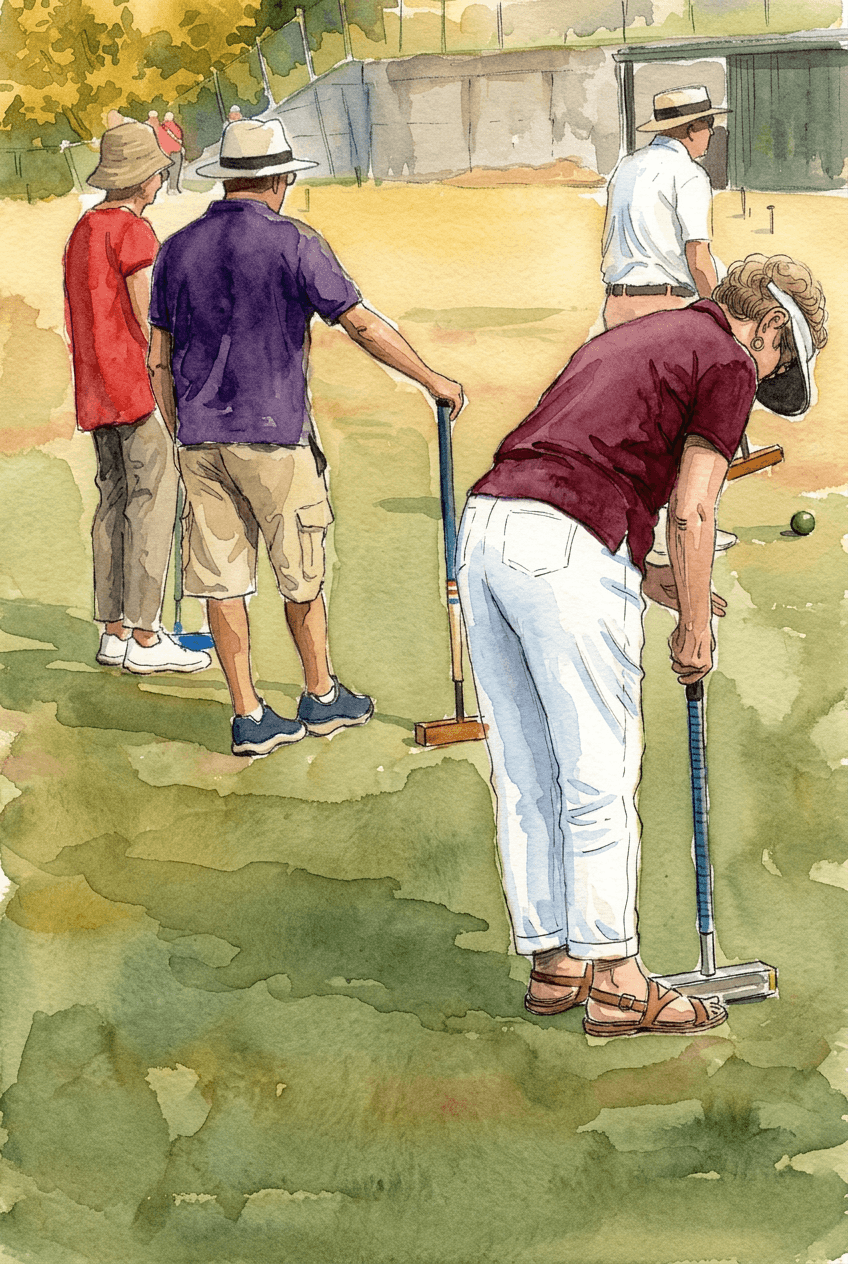
East Brisbane Croquet Club hosts its Inaugural Golf Croquet Doubles Gala Day on Saturday 9 May. Individual entry, $25, only 24 spots. $300 prize pool.
Holistic Health Benefits of croquet
A strategic advocacy paper prepared by the Croquet Association of Queensland